Puritan Storm Rising Interview on Eschatology Matters

The following is an edited transcript of an interview I did on Eschatology Matters with Mike Virgilio.

Video: Puritan Storm Rising Interview on Eschatology Matters
Puritan Storm Rising Interview on Eschatology Matters
Click play to connect to youtube

Book

Puritan Storm Rising

Jay Rogers

Rediscover the Fire That Forged a Nation. Join the Fight to Reclaim It.

Puritan Storm Rising is more than a history; it is a call to arms. This book unearths the explosive legacy of the Puritans — their covenantal theology, doctrines of grace, and vision for a Christian civilization. From the Reformation to the Great Awakenings, their convictions shaped the West and birthed America.

Read more

Puritan Storm Rising: Recovering America’s Cultural and Spiritual Heritage

Interviewer: Mike D’Virgilio
Interviewee: Jay Rogers

Mike D’Virgilio: Welcome to the Based Boomer podcast on Eschatology Matters, part of the Fight Laugh Feast Network. I have the great privilege today to interview Jay Rogers, author of the magisterial book Puritan Storm Rising. When I was thinking about how to describe the book and introduce Jay, the word "magisterial" just came to mind because the book demonstrates a real expertise and breadth of knowledge that is truly amazing. I’m excited to talk to him about it and share that with everybody. So, without further ado, I’d like to introduce Jay Rogers. How are you doing, sir?

Jay Rogers: Very good. How are you?

Mike: Good. Thank you for joining us today. To get started, could you give us a little background for those who don’t know you? Where you’re from, your family, your career, and all that kind of stuff.

Jay: I write quite a bit about that in my book in little snippets, explaining my background and why I’m interested in this. A lot of my research is personal, not just from books. I actually lived in Framingham, Massachusetts, just south of Sudbury and Concord. Those two areas were very significant in the 1700s and 1800s. First, for the Revolution, and then as the home of a lot of literary giants like Emerson, Thoreau, and Longfellow — some Christian, some not.

I was also a student in Amherst. The neighboring town was Northampton, so I’ve been to Jonathan Edwards’ church. As an undergrad English and psychology major, I studied American lit. You’re right there in the area where most early American writers were from — New England — so I got a bit of background on Jonathan Edwards and others.

After I was converted to Christ — a born-again experience in 1985, after I graduated from the University of Massachusetts — I was able to have a deeper appreciation because I understood the whole history of revival and spiritual awakening was in this area. My cousin and I started a newsletter where we wrote a lot about history and revival theology. We met another guy from Ohio, Jeff Sigler, who came to preach at our church. My pastor said, "You’re gonna like this guy." He wrote the introduction to my book. Unfortunately, he passed away a few years ago, but he was a very good friend.

Jeff came to our church, and we took him on a tour of the North Shore — George Whitefield’s church, places where Whitefield preached — and went over the history of the Great Awakening in New England. He had things to say, it was really interesting, and he came back several times to preach.

I moved to Florida to join a publication called The Forerunner, and everything I do now is connected to that — forerunner.com. I’ve continued the publication online and through video and multimedia. I continued my writing on this topic, and whenever I’ve returned to Massachusetts, I’ve always visited Plymouth or done little video projects. I’ve tried to be a tourist in my own hometown to deepen my knowledge of the Christian history of the area. Behind me, I have a collection of Christian books I bought in antique bookstores in New England.

I’ve been writing over a period of time. We were going to do a publication called The Puritan Storm, and that never really materialized, but a lot of the articles went on my website. I did another publication called The Boston Awakening; some of that material is in this book. We were working with some students at Harvard around 2006 who were meeting every week to pray for revival on the Boston campuses. Someone approached me and said, "We’d like you to do a Boston Awakening magazine." So I put it together, covering the history of the Puritans, the Pilgrims, and revivals in Boston from the beginning up to the 1900s, with the hope it would happen again.

But when I presented it, they said, "Well, it’s kind of heavy on the Puritans and Calvinism." I also had D.L. Moody (from Boston) and Billy Sunday in there — it wasn’t only about that. But to them, even to many conservative Christians, the Puritans are seen as almost a 400-year-old embarrassment. So part of my goal became to create a video. We did video productions with Jeff and with others, like Paul Jehle and a guy from South Africa named Peter Hammond (who is also a postmillennialist Calvinist). The idea was to put together a video during a time when you could still sell a DVD. Once that time passed, I thought, "I’ll put everything into a book and make the video curriculum available through the book." In the book, there’s a little 12-week discipleship course. People can sit down, watch the videos, and go through the book. It’s also suitable for high school students and homeschoolers. That’s how the book came about, mainly because of my background, my love of revival history and the Great Awakenings, and my personal experiences with people like R.C. Sproul, who was an expert on Jonathan Edwards and the Puritans.

Mike: Let me ask you: you’ve sort of answered my second question about why you wrote the book, but I want to explore that a bit more. How did you come to postmillennialism? You obviously weren’t born one.

Jay: It was around the time I met Jeff Ziegler. We were talking about this after a Bible prophecy expert came to our church.

Mike: What were you before that?

Jay: I was a new Christian who, as a teenager, had read Hal Lindsey as a Roman Catholic kid and basically assumed that was it. But when this prophecy expert explained dispensationalism, it made no sense. Before, I thought I had it all figured out, but as soon as he started explaining, I thought, "Wait a minute, this is bizarre." I also remember looking at figures like Wesley, Edwards, or even Charles Finney in the 1800s — they were all postmillennialists. The first time I read that, I said, "How could these guys be so spiritual and lead these Awakenings, yet be so wrong about eschatology?"

Then I ran into a book called Christ’s Victorious Kingdom: Postmillennialism Reconsidered by John Jefferson Davis, a professor at Gordon-Conwell. I was in a bookstore one day and picked it up. It was a 100-page book, I read the whole thing, and I thought, "Oh, this makes sense." He came to the same conclusion studying the history of the missionary movements in the 1800s, asking why almost to a man all these missionary leaders were postmillennial. In studying it, he became postmillennial himself. I kind of followed in his footsteps. I’ve never met him, but I had a lot of respect for him because he was involved with the pro-life movement, and we were involved with Operation Rescue in Boston.

Part of my story is realizing we need to be able to change the culture as well as be pious Christians. It’s one thing to be holy on the inside, but our holiness also has to be a social holiness where we move outward. I realized you can’t just be in the pew listening to sermons and being a Bible expert; you have to go out into the culture, into your neighborhood, make disciples, and change things that are evil. Like him, I found most people who reject postmillennialism don’t know anything about it. As soon as I started studying it, I saw there’s an actual biblical case for it.

Not all the Puritans were postmillennialists, but a good portion were. Even if they weren’t, they still believed their faith would impact the culture. Wesley, for example — I don’t think he was postmillennial per se — but he was very much about influencing the culture. Oliver Cromwell would be a good example; he believed this was the fifth kingdom. He wasn’t a theologian but a statesman, and what he did to change England and America… we call them "operational postmillennialists." That’s a good term for people who believe Jesus is coming back soon but operationally work as though they’re building for the long term. That’s a term Gary North came up with, I believe. Many more people today, especially after people like Charlie Kirk, are operational postmillennialists — more than ever in the past when dispensationalism and a dualistic pietism were the thing.

Mike: In terms of the book, I see why you wrote it, but what is your goal, your objective?

Jay: I’ve wanted to write it for a long time. It was going to be a publication, then a video, and I thought of doing spin-off books as part of the video. I did one called The United States of America 2.0: The Great Reset (that’s actually part three of the book) and another on John Knox. My goal is to do a whole series where each figure in the book has a separate booklet under 100 pages because there’s so much material. The book is already over 400 pages; so I want to make it more accessible. For example, I have an article on "Puritanism vs. Pietism" that’s in the book, but not the whole thing. I can do a spin-off on that.

The most recent concept was: since we never did the video, I can take everything that would have been in the videos, edit and distill it into a book, and then offer the videos as supplemental materials through links. In the digital version, there are live links so people can go directly to the video as they read or as part of the lessons at the end. There’s a whole lesson and study guide at the end of the book. I wanted this to be not just a book but a whole training curriculum. If people teach it and make disciples, it can change America.

Mike: Amen. So, my next question: why are the Puritans so important, not just for America’s past, but for our future?

Jay: The most important thing to understand about the Puritans is that they didn’t call themselves Puritans. If you called them that, they’d either take it as an insult or not know what you were talking about.

There were two groups in Massachusetts. One were separatists, called the Pilgrims (though they didn’t call themselves that either). They wanted to separate from the Church of England and were a bit more pietistic than the Puritans, but they still wanted to change the world. They didn’t come to America thinking they’d all die when Jesus came back next year; they were thinking about future generations.

The Puritans themselves were dissenters within the Church of England. In the beginning, they didn’t want to overthrow the king; they wanted the king to be a good Christian. They ended up overthrowing the king. Eventually, the two groups began to see each other’s side and came together. So it’s not really even "Puritanism"; it’s more what I call the "Boston Awakening" — an awakening that took place in Boston that was an extension of what happened during the Scottish Presbyterian book movement. If you’ve ever read The Puritan Hope by Iain Murray, it’s about that period. People who know about the Great Awakening don’t always know there was an even greater awakening in Scotland about 200 years before, in the 1500s and early 1600s. It was the type of awakening where every household in Scotland was affected; someone was born again in your home.

An interesting thing about the Reformation in Scotland was that it wasn’t imposed by the king (like in England with Henry VIII); the people imposed it on the king — or the queen at that time. They imposed it on the government, so the entire nation of Scotland was, in a sense, "born again." They covenanted with God. They were called the Scottish Covenanters. The Puritans were not covenanters in that sense; they believed church and state should be separate, that a minister couldn’t hold civil office in Massachusetts. They believed the two governments operated separately, which gave us the idea of sphere authority, later developed by people like Abraham Kuyper.

In the book, I try to emphasize it’s not just the Puritans — I call it Puritan Storm Rising, though people say you shouldn’t use that word because it’s negative. I’m writing about the Puritan movement, the Presbyterian movement, Calvinism, what we call the neo-Puritan awakening, which would have included Edwards, Whitefield, and even to a lesser extent the Methodists. Whitefield and John Wesley were together; Whitefield was a Calvinist, Wesley an Arminian. The Whitefield side were called the Welsh Calvinistic Methodists — a lot of people don’t know that, but they were considered Methodists too. It was all one big movement; half were Calvinist, half were Arminian. Today we know the Arminian side because they separated from the Church of England and formed the Methodist Church in America.

Then, in the 1800s, the social reform movements were influenced by neo-Puritanism, but not everyone was a Puritan. For example, in England, William Wilberforce was a good friend of John Newton (a Calvinist who wrote "Amazing Grace"). There was a whole group around them (I forget the name — that’s why I write books to remember things — it’s in the book). Wesley influenced him too. Wilberforce didn’t want to pick sides; he wrote a book on being "just a Christian" and the need for social reform.

When R.J. Rushdoony did his history of Reconstruction, he included people like William and Catherine Booth of the Salvation Army. I don’t talk about them much in the book (I might mention them), but they were worldwide evangelists from the Methodist movement, influenced by Finney. I don’t have space to talk about all that, but I’m talking about that whole movement from that time — the world mission movement in the 1800s, Abraham Kuyper in Holland. A lot of Calvinists get persnickety about this: "Oh, Abraham Kuyper didn’t believe in this or that." Okay, but he did something, and he influenced Cornelius Van Til, who influenced Rushdoony and Francis Schaeffer. That whole movement, mostly Calvinists, has really changed the world and continues to. I want people to get that vision of changing the world. I used to think that was a pipe dream — that Jesus would come back and that’s when it would actually change — but I don’t believe that anymore.

Mike: I was thinking about the concept of covenant, a very Christian concept. Can a nation actually have a covenant as part of its governing ethos? People get persnickety about it: "There’s no national covenant; there’s only one covenant with Jesus Christ." I agree there’s only one covenant God established with Adam, Abraham, Moses, David, renewed throughout the Bible, and finally sealed in the blood of Jesus. But when an individual comes to God, they become part of the covenant. When a family comes to God, is the family part of the covenant? Yes, a Christian family is part of the covenant. What about a church? Can a church be in covenant with God? If you stretch Christians far enough, they’ll go that far. But when you start talking about a national covenant, that’s when people protest. They see it as too individualistic.

Jay: I think as a nation, as families, individuals, churches, and community organizations follow the covenant of God, there’s a cultural covenant where we as a civilization are covenantal. You could say we have a national covenant. The Puritans certainly believed that. If you look at the early compacts and state constitutions, they start "in the name of Jesus Christ." Look at the Massachusetts Constitution written in 1780; it sounds like the U.S. Constitution but is all about Jesus. Our U.S. Constitution should have been that way, but there was dissent. I don’t have a problem operating within that framework. I think the U.S. Constitution borrowed a lot from the idea of covenant, and even though it’s a flawed document, we can still look at it as our national covenant and improve it, reform it to be more overtly Christian — which everyone assumed it was up to the 20th century.

One thing about Christians today is that most are secularists. They see separation of church and state, and if you mention "Christian nation," they think theonomy meaning tyranny. We need to educate them.

Mike: I was going to ask you: how do we educate Christians that theonomy, covenant, or "Christian nation" are not tyrannical concepts? We’re not forcing people to believe anything.

Jay: I have a friend, Andrew Sandlin in California. He has an interesting saying: liberals look at Reconstructionists and think we want to seize control of the government and enforce things through political means. He says, "That’s what they do. That’s exactly what liberals do." So they look at Christians talking about a Christian America and think we want to seize control and impose something. But really, what we want is the freedom to homeschool our kids, to speak out, to do Christian media without being censored by social media groups controlled by secularists. We don’t just want a voice at the table; we want the whole table, but we want to do it through volunteerism. We want people to be converted by the sword of the Spirit, not the physical sword. We want people to come happily. That’s not going to happen overnight, but we have to educate people that the goal is to make disciples of nations, not just individuals. That’s kind of what Jesus said. My book gets into that quite a bit toward the end.

Mike: You talk about recovering our American logos. That’s a broad historical overview. Can you explain what that means and why it’s important for recapturing our civilization for Christ?

Jay: I understand some Christians will misunderstand this. The term logos is in the Bible: "In the beginning was the Word [Logos]" (John 1:1). The Logos is Jesus Christ. The Greeks had another idea of logos as wisdom. John intentionally used that word to appeal to both Greek and Hebrew audiences. In Hebrew, wisdom (chokmah) is personified, and that person is Jesus Christ.

What I say in the book is that every nation has its own national wisdom because God didn’t create us as cookie-cutter copies. Everybody has their own personality; families and nations have their own personalities. That’s good. One day God wants to see the collective personalities of the world come into the church. The question I’ve always had is: Are we going to give up our national personality, or bring it into the kingdom of God? I discuss that in the book.

I believe every nation has its national logos. For America, it would be English Puritanism, some Scottish Presbyterianism, etc. We have Catholics and other types of continental Protestantism here (Lutherans came in the 1800s), but the core foundation was the Puritan logos. In another nation like Germany, theirs might be Lutheran; in Russia, it might be the Orthodox Church. Some people protest: "How can you say that? I’m Protestant." I believe in time God will reform the entire church, but each country will have its own civilizational logos, understanding things a bit differently. Africa is very evangelical, but an evangelical church in Africa has a different way of looking at things.

There’s an interesting interview with Tucker Carlson and George Galloway. Galloway is a classical liberal from the Labour Party, but he’s strongly pro-life, anti-LGBTQ, and pro-family. The people who support him now are often black African churches because he’s pro-life. He’s in line with this awakening happening, even though I don’t agree with him on every point.

Another guy I listen to, Colonel Douglas MacGregor, said what needs to happen in Europe is something like during Cromwell’s time — the English Civil War and revolution. That’s the only way things might come around. Hopefully, it doesn’t come to violence, but something radical and drastic needs to happen.

Ironically, many in America say, "We don’t want all these immigrants." But most immigrants coming to America are actually Christians from South America and elsewhere. In England, except for Muslims (a small portion), many immigrants are black Africans in evangelical churches — often the only outspoken evangelicals in London. I see God doing a work. We want England to be England, not Africa, because England has a special place in our civilizational logos. We came out of the Celtic and Anglo-Saxon world. You don’t have to be English or Irish to be part of that, but that’s where our wisdom came from. I write about that in the book — certain symbols and literature everyone should read to understand how Christ worked to make England a Christian nation and then America.

Mike: The perennial war of the logoi… It’s powerful to see how the Christian logos through time came to defeat paganism because it’s superior. I talk about that in my book — this overcoming of paganism, starting with Abram. It’s been a battle through history: Abram and God’s people versus the pagans.

Jay: I did a video project with Eric Holmberg called The Abortion Matrix (part two of The Mass of the Ages). One thing I did was read G.K. Chesterton’s The Everlasting Man (he’s Roman Catholic, but many Reformed people love him). It’s about the conversion of pagan nations to Christianity, from prehistoric times to the present. He says there are two types of societies: a dark logos (related to what the Greeks called Dionysian) and a light logos (Apollonian). These terms became popular in the 1800s among sociologists and philosophers. The idea is that God prepares a society through the Apollonian logos.

Chesterton has a chapter called "The War of the Gods and Demons" about how Carthage attacked Rome. Carthage was involved in human sacrifice — babies to Ashteroth and Molech, the same Phoenician deities the Philistines and Canaanites sacrificed to, and Israel got involved too. Modern-day abortion is child sacrifice. The Romans were horrified by what they might become if Carthage took over, so they fought to the last man. Finally, Carthage with its elephants got stuck in the swamps of Italy and had to retreat, leading to its downfall. Chesterton says that allowed Rome to spread and, being more accommodating to other religions, allowed Christianity to flourish.

There’s another theory in a book called Eternity in Their Hearts about how many pagan societies have a Christ myth. When evangelists come, they say, "We know about this; we’ve been waiting for you." I experienced that in Russia. Russia was captured by a dark logos for a long time (Communism). After the fall, I met people in cities with no churches. I was on a train with a guy from Siberia who said the only Christians in his town were Russian Orthodox priests. Some cities founded after the revolution had no Orthodox churches at all, so kids grew up knowing only atheism. When we sent people to preach in colleges and high schools, one guy told me he could see people’s faces go from dark to light — literally, light came into their eyes. They understood Jesus Christ for the first time. In this country, people are inoculated to the gospel; it’s hard to talk to someone about the Puritans or Christianity without them saying, "Oh, they were haters" or "You’re not a Christian nationalist, are you?" There’s animosity. But in countries where they’ve had nothing, there’s an emptiness, and they create myths. Lenin was made a Christ figure. They wanted a Lenin cult, with schoolchildren almost worshiping him. When those kids encountered the gospel, some became the most committed Christians because they were already committed to something empty.

Materialism can’t fulfill. I also find that true in Mediterranean cultures — Muslims, Jews, Italians, Greeks — who had a form of religion but denied its godliness and power. When they find something powerful, they want it. It’s hard to convert them at first, but when they do, they become the best Christians. That’s what we’re looking for — not ethnonationalism, not just white Protestant Anglo-Saxon Christians, but everybody grabbing hold of that vision for America our founders had, owning it, and preaching it to the world.

Mike: One of the reasons I argue in my book is that we’re at the end of a 300-400 year experiment in Western history called secularism — the Enlightenment birthed it, promising a society without God (keep God in your closet, church, or home, but no impact on the greater culture). It hasn’t worked, and there’s nothing after that — just more of the same. People are looking for hope. That’s why I think your book is so timely.

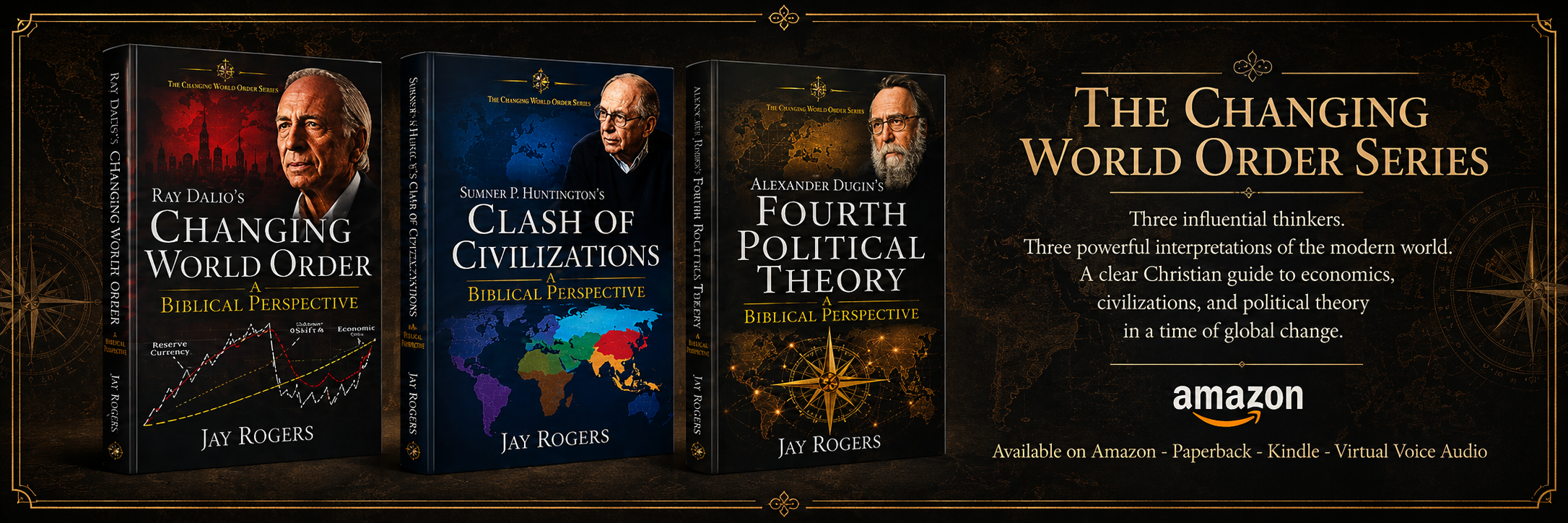
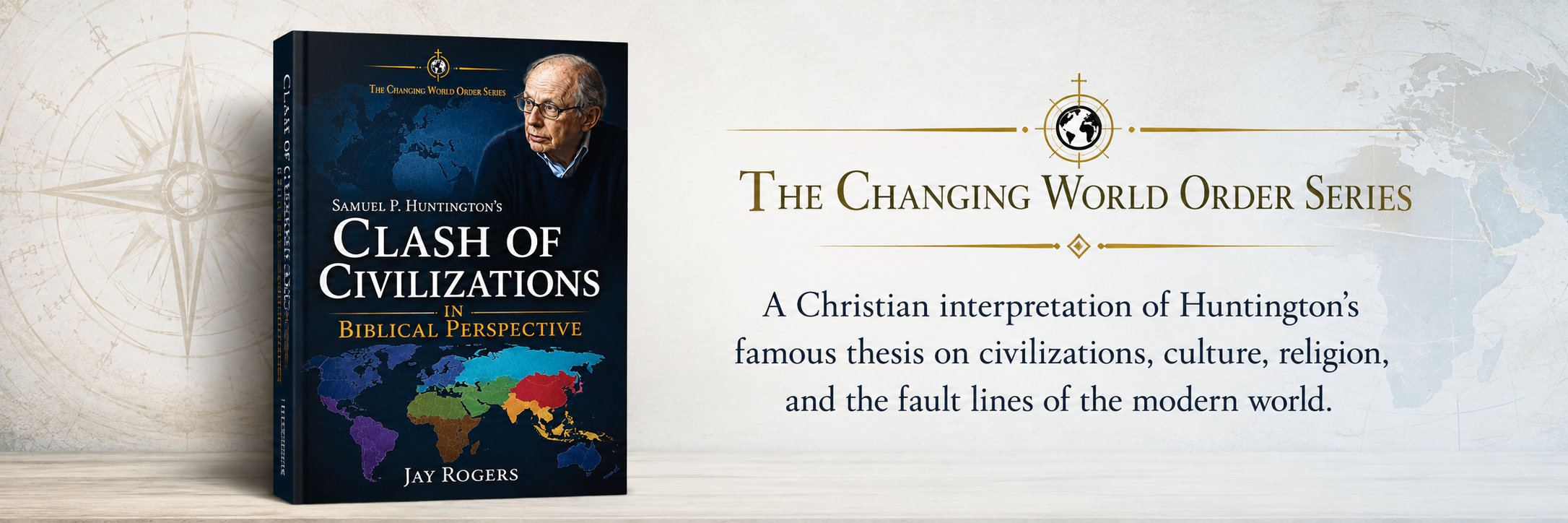
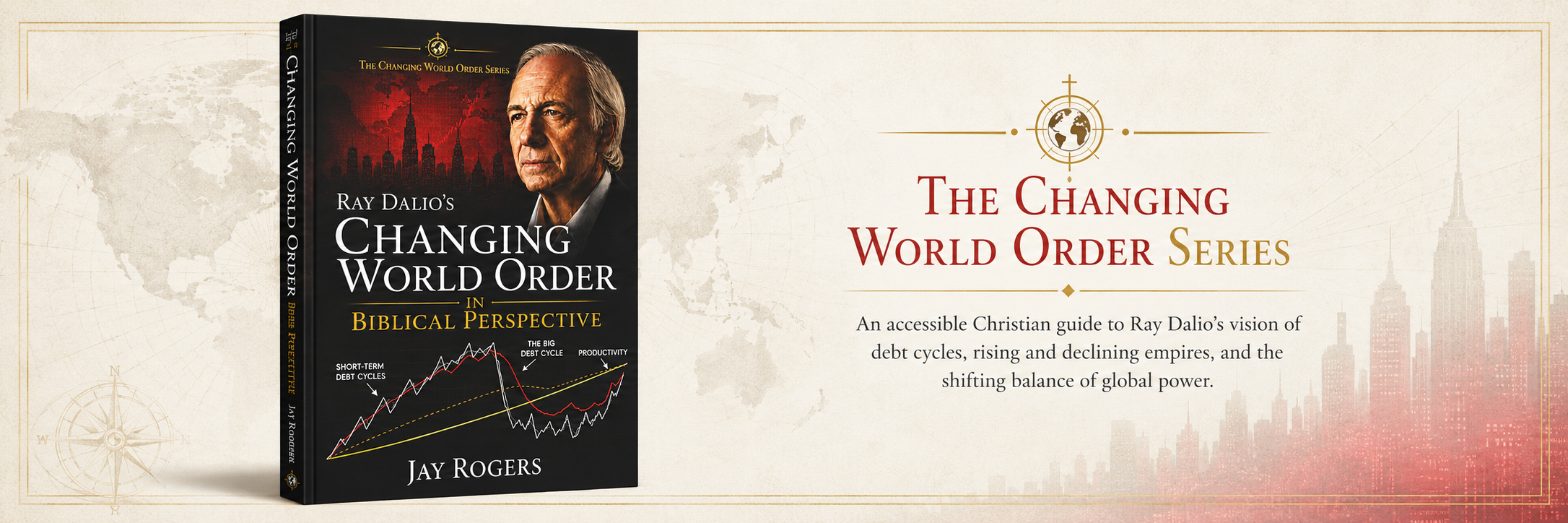
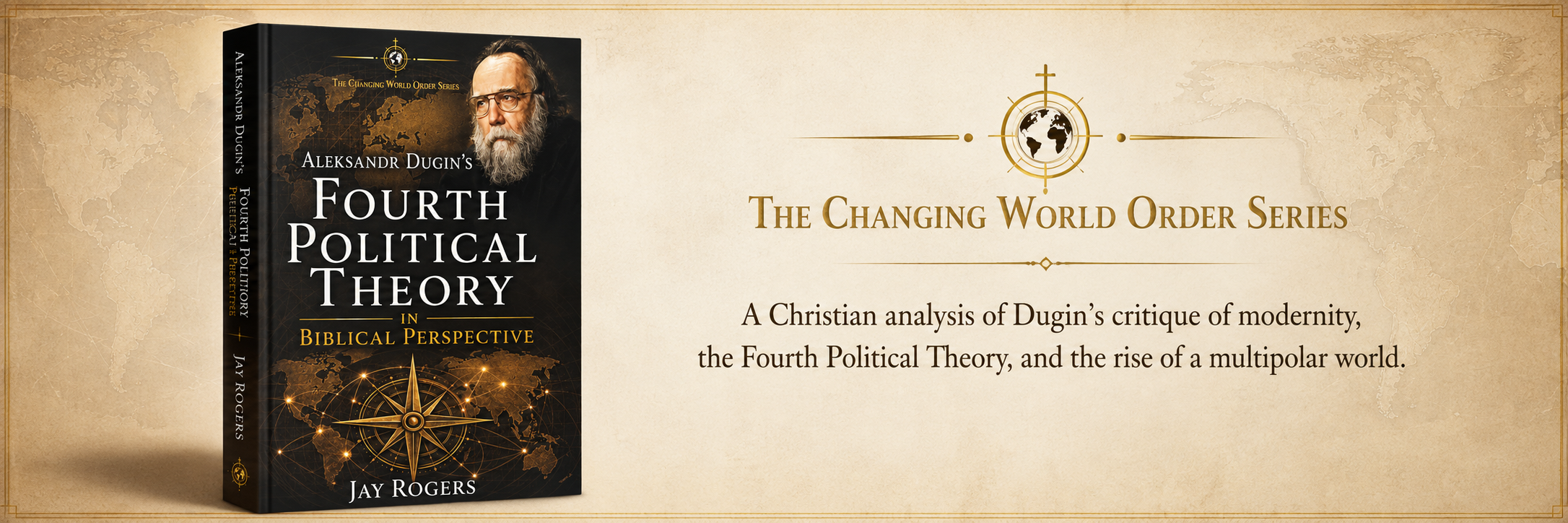
Jay: I have another book that dovetails with this, The Fourth Political Theory: A Biblical Perspective. In it, I cover three philosophers (none are Protestants or evangelicals): Ray Dalio, Samuel Huntington, and Aleksandr Dugin (a Russian political philosopher). Dugin calls it "post-liberalism," meaning we’ve eliminated everything else, and now liberalism is your only choice. As you said, you can’t just have more of that. It creates a vacuum, creating postmodernists who used to say "God is dead," but now if you say that, they ask, "Who died? Did you know him?" Literally, many young people in the West, former communist countries, and secular liberal countries know nothing about religion. They assume this is just how it is. Now we’re seeing young people, especially young men, gravitating toward more traditional forms of Christianity. It’s happening in evangelical churches, but also in more traditional rites — Eastern Orthodoxy, the Latin rite. They want something ancient, rooted, not the whiz-bang evangelical experience.

R.C. Sproul used to say he’d go to ministers’ meetings where they’d ask, "How many do contemporary worship? How many do a mix?" R.C. would say, "Neither. We just do traditional." Everyone would turn their heads: "Don’t you want to reach young people?" He’d say, "Our job isn’t to reach young people; it’s to glorify God in worship." As a result, they have a Bible college (on the campus of St. Andrews) where people from all over want to come. They train up good reformers. That church has been successful doing traditional hymns, traditional Puritan theology, and postmillennial eschatology. That’s what people are attracted to. I’ve heard pastors in Orlando lament, "This is becoming a little Geneva." I wish it were! I do think that’s on the horizon.

Mike: Lastly, you mentioned the term "ethnonationalism." "Christian nationalist" is used as an epithet. Talk about why a Christian nation isn’t ethnonationalism.

Jay: Because it never was. Even in the Old Testament, people think the covenant was based on bloodline — that if you’re a descendant of Abraham, you’re one of God’s elect. But Abraham had people in his household who weren’t his descendants but became part of Israel. When they came out of Egypt, there was the "mixed multitude" — people not descended from Abraham but part of the Hebrew nation. As long as they were part of the covenant, did the Passover, they came out. Joseph’s sons Ephraim and Manasseh — their mother was an Egyptian princess. So two tribes of Israel were half Egyptian. It was never about pure bloodline. There were always immigrants, sojourners, aliens welcome in Israel as long as they followed the covenant; within a generation, they were Israel.

In Paul’s time, he said not all Israel are of Israel. You could be a descendant of Abraham, but Jesus said God could turn stones into sons of Abraham. The seed of Abraham is Jesus Christ, not his bloodline. Even Jesus had Gentile women in his lineage — Rahab, Ruth, and Bathsheba (probably not descended directly from Israel). So Israel was never covenanted by ethno-nationalism but by faith and obedience.

If you want to be part of Christian America, embrace the American covenant. Embrace that our founders loved Jesus Christ (not all did, but embrace the ones that did). Learn from them. We have our own American mythology where we make people into super-Christians, but it’s a story we tell, songs we sing. For example, Paul Revere — many don’t know he was a Knoxian, Cromwellian revolutionary. We sing about Paul Revere’s ride, but what goes with that is the idea that his father wanted him to go to the Anglican church, but he’d run to the Puritan church to hear about the Revolution and the Sons of Liberty. He and his father disagreed over that. There are little stories people are unaware of. I tried not just to repeat David Barton "WallBuilders" quotes (though I have some) but to include original research.

It’s a contentious issue, partly because of unlimited illegal immigration by leftists who hate America and the West. The more they dilute it, the more pushback there is. We should listen and understand, but nonetheless, it’s a powerful argument for what a covenant Christian nation actually is.

Mike: Any last words you’d like to share?

Jay: I want to comment on that. I have another book, The Fourth Political Theory: A Biblical Perspective. It’s a long book, so I’m in the process of breaking it down. It covers Dalio, Huntington, Dugin, and others who basically say the same thing. I had to write that book first before this one to get a larger perspective — not just America, but all nations. We expect every nation to become Christian, but their heritage won’t be Puritan. There’s a big evangelical movement in Brazil, but also many Catholics. Their expression of Christian Brazil will be different from ours, and that’s okay.

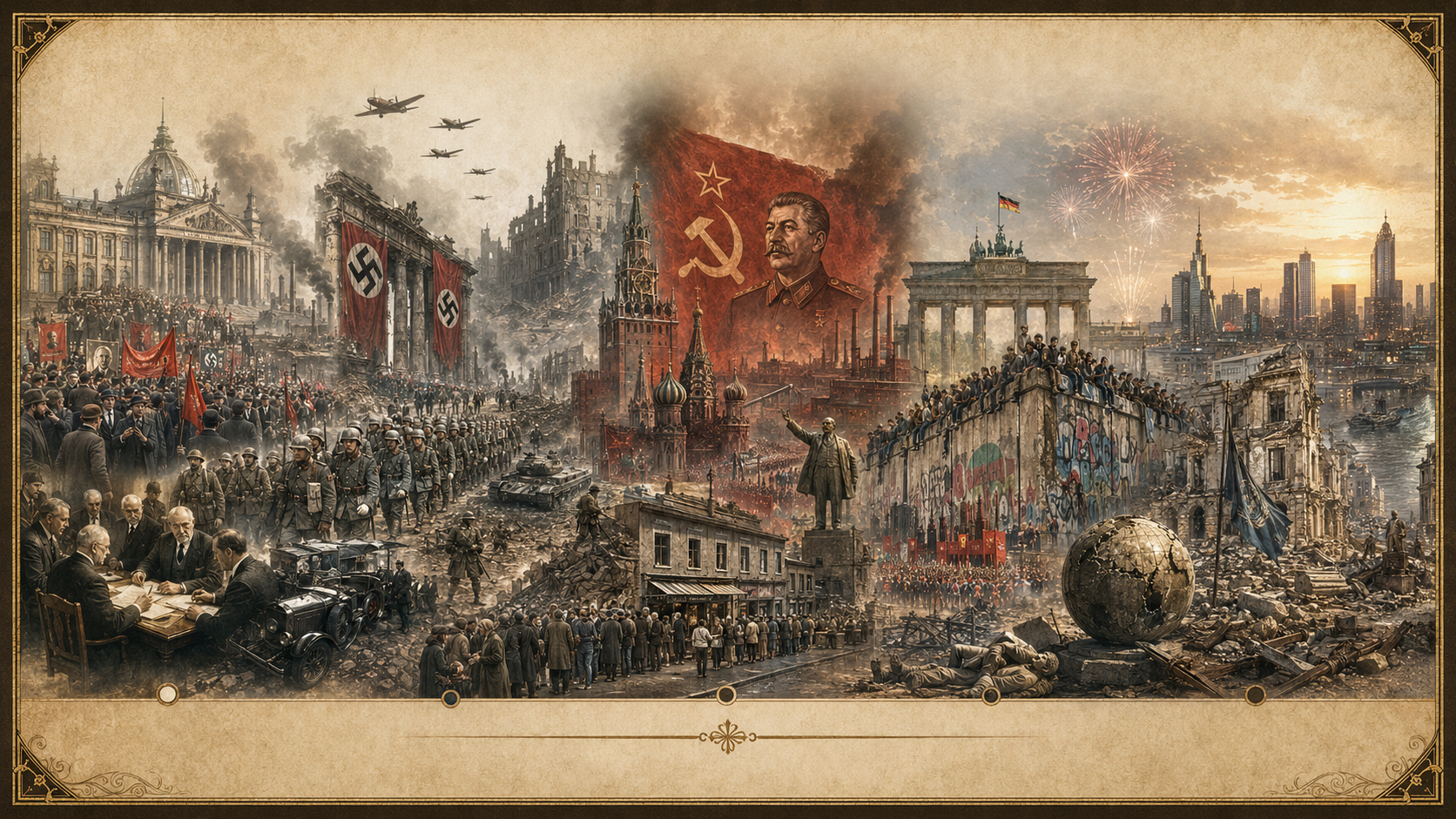
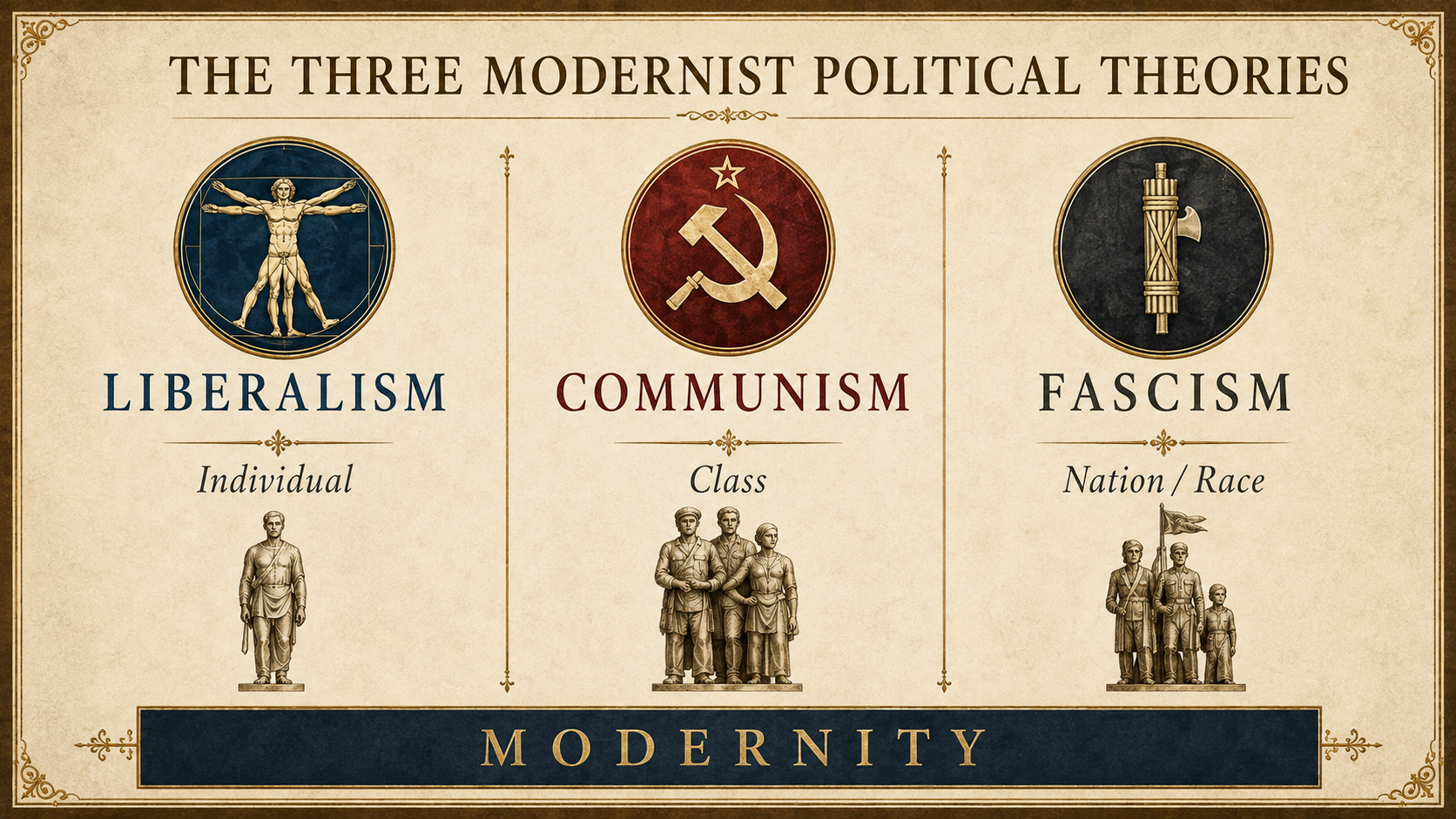
You mentioned modernism: all modernist political philosophy, theology, and philosophy in general hates tradition, the family, faith — anything ancient. Everything must be modern. That spilled over into political theory. Liberalism began with individualism and individual rights, but when people forgot God (as Aleksandr Solzhenitsyn said: "The West forgot God, Russia forgot God, but the West forgot God too"), we began looking to the state for our rights. Wherever the source of your law is, there is your God. The state became a god walking on earth, as Hegel said.

Another philosopher, Jean Paul Sartre (not a Christian), noticed that as we look to the state for more individual rights, the state becomes more powerful and tyrannical, creating a "prison without walls." Liberalism led to communism (Marxism) as a challenge, seeing capitalism without the Protestant work ethic as greed oppressing the poor. Marx also hated God, family, etc. Modern Russians know communism destroyed the family; they’re trying to reverse the declining birth rate.

Fascism was the other political theory from the right wing, wanting tradition but based on pagan Nordic gods and race, hating everything not German (or Italian). So those were the three modernist political theories. I say we need a fourth political theory. For America, it should be neo-Puritanism — a government, society, and culture based on God, faith, family, and freedom. Faith in God, the family as a building block, and liberty under the law (not do-whatever-you-want liberty, but liberty in obedience to God’s covenant). That’s the only true liberty. It’s not modernism; it’s ancient. The more ancient, the better.

Mike: Wonderful. So you argue for that in the book. I highly recommend it — great learning, great reading, a sweeping scope of history. It’s another contribution, another brick in the wall as we all do our little bit like Nehemiah. Thank you for your time. I really appreciate you, all the work and effort, and investing your life in this and sharing it so others can benefit. The book is on Amazon, in Kindle and virtual voice Audible versions. Your website and your book are awesome too. I actually bought your book the other day and started it. It’s very similar to what I did; I think we’re kindred spirits. The Holy Spirit is revealing this to people. We’re going to see more and more of it, which will be great. People need a better understanding that this isn’t about top-down rigidity, but people volunteering freely in the day of the Lord.

Jay: Amen.

Mike: Good stuff. Thanks again. This is Eschatology Matters, part of the Fight, Laugh Feast Network. Have a great day. Bye.

Your comments are welcome

Use Textile help to style your comments

Suggested products